Showing posts with label history. Show all posts

Tuesday, August 12, 2014

A Husband's Permission

The sixties may seem like an aeon ago, especially to young women. But in the span of human history, it isn't very long ago and the changes that have happened between then and now are monumental. The young women of today who don't want to call themselves feminists may not realize what the feminists of the sixties achieved. To see what they came out of to where we are today is astounding.

Courtesy CNN
They literally brought women into the world. We were sequestered away as an accessory of husbands. Our job was to keep that home and that's it. Women didn't have choices like we do now. And if they did choose to do something different, rest assured that their way was made very difficult.

When I was in college, one of my professors told us that when she was first married (in the seventies) she went to the local library to get a card and was told she needed her husband's permission. As a married woman, she had the rights of a child! So, as a reminder, here are five things women couldn't do in the sixties.

Wednesday, July 30, 2014

Helping the Eager Beaver

I recently watched a great History Channel series on DVD, America: The Story of Us. It made me sad to hear that when Europeans fanned out across the new America, they found beavers in the millions. Long ago hunted almost to extinction in Europe, beavers were hunted here for their thick pelts and to make men rich. Their numbers quickly dwindled.

But even today they’re considered a pest when they interfere with our plans and designs. All too often, instead of looking for creative solutions, we simply kill animals considered pests. Even though it was us who invaded and changed their natural environment.

Courtesy history.com
When we take the time to study the behavior of any wild animal though, we often find that they are incredibly beneficial to our environment and us. But it takes time, curiosity and a love of animals to understand their role and to make the changes necessary to thrive together. Figuring out how to share our world with animals challenges our traditional notions of success. For hundreds if not thousands of years, humanity has focused on conquering nature, not living in it. We’re quickly learning, though, that this way of living has dramatic unintended consequences.

Courtesy pbs.org
This was the focus of another great TV show, Nature: Leave it To Beavers. Beavers, it turns out, are enormously important in our changing climate! They keep water from trickling away from areas that desperately need it. They build elaborate dams, create ponds, attract and protect wildlife and develop lush wetlands. To reintroduce these creatures to wild areas, scientists trap and relocate them from suburban areas. The women who do this work have the opportunity not only to help the animals but humanity and the planet as well.


Little girls who love animals invariably want to be veterinarians when they grow up, wanting to work with dogs, cats or horses since those are the animals they’re most likely to interact with. Some fall in love with dolphins and dream of being a marine biologist. But there are a multitude of female scientists studying and helping wild animals in their natural habitats or helping to restore their habitats. Working in some of the most stunning landscapes in the world, these women are improving the lives of animals through hands-on involvement. It can be as rewarding and as heartbreaking as being a parent. Another fantastic show I've been watching on PBS is about the men and women who have become devoted parents to wild animals. New episode on tonight: My Wild Affair.


To prepare for this work, kids can make a practice of observing and wild animals in their own environment, visiting protected wild spaces and learning about the wild animals that live there and how our livelihoods are symbiotic. Understanding that wild animals have families, homes, favorite foods, things they’re afraid of and things that they’re good at makes it easier to appreciate them. They really aren’t so different from us!


The stereotype of a scientist is someone in a lab with goggles on, looking at the world through a microscope. But more and more, scientific minds are being used to study our natural world and design ways to live better, longer, and happier lives. Getting a college degree in biology, microbiology, physics, chemistry, math or statistics is now a very versatile choice, offering the most diversity in careers and allowing future job seekers to be part of team working to help animals. For we now know that when we give animals our love and understanding, everyone is better off.

Saturday, July 12, 2014

A Woman In Space

When I was a sophomore in high school, someone at the school interrupted our class one day to announce that there had been an event. She wheeled in a television and we all watched a news report on the space shuttle Challenger, which had just exploded in midair killing all seven people on board including, Christa McAuliffe. McAuliffe, 37, was the same age as my mother. She wasn’t an astronaut, she was a teacher; a regular person who had won the incredible opportunity of going to space. Only she never got to space.

Watching the explosion and the aftermath, seeing the faces of the astronauts on board, and imagining all their hopes and dreams for going to space was devastating. I was reminded of the stories my mom had told me about the day President Kennedy had been killed. She too was in school. She was almost exactly the same age that I was when it happened. At the time, as a self-absorbed teenager, I wasn’t really aware of those coincidences; all I knew is that it was my first experience with a national tragedy and I would never forget it.

Two years before, my family had gone to see the space shuttle Challenger land at Edwards Air Force Base not too far from where we lived. We drove several hours to the hot California desert and then stood, windblown, on the flat barren earth for about 40 minutes listening to transmissions from the control room. Then, people started pointing at the sky. It was hard to see but there was just the tiniest speck of something up there. A bright light glimmering in the biggest, bluest sky I’d ever seen. It made a wide slow arc and then we heard two loud booms. Before my dad had finished explaining what a sonic boom was, the Challenger had stealthily approached and was on the ground trailing a cloud of dust. We roared with applause. Moments later, the astronauts disembarked and it was like watching aliens land on earth. They came from outer space.
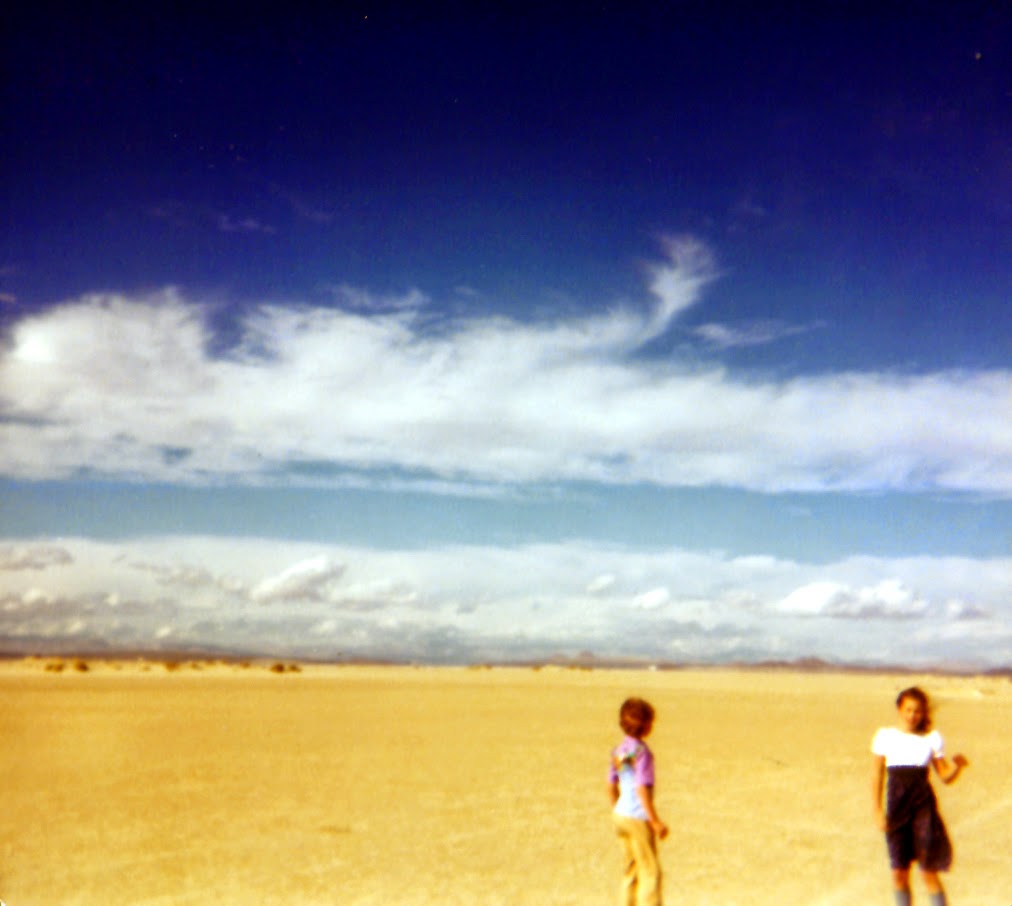
©2014 by Angelique Little
I had only the faintest idea then that I was witnessing history. Sally Ride had become the first American woman to go to space. Following the Challenger explosion and the death of Christa McAuliffe, the uniqueness of a woman in space was brought to the fore and I knew then without a doubt that more than the sound barrier had been broken. Growing up, I’d always envisioned astronauts as men. I drank my milk out of the Apollo glasses issued in 1969 to commemorate Neil Armstrong and Buzz Aldrin walking on the moon. Sally Ride hadn’t just been the first American woman in space; she was a physicist with a PhD. She was young and pretty and brilliant. And she was an astronaut. When she finished her maiden voyage, the controllers corrected their statement, “All five crewman doing a walk around inspection,” to “all five crew members.” Powerful changes began occurring in the hearts and minds of all Americans.
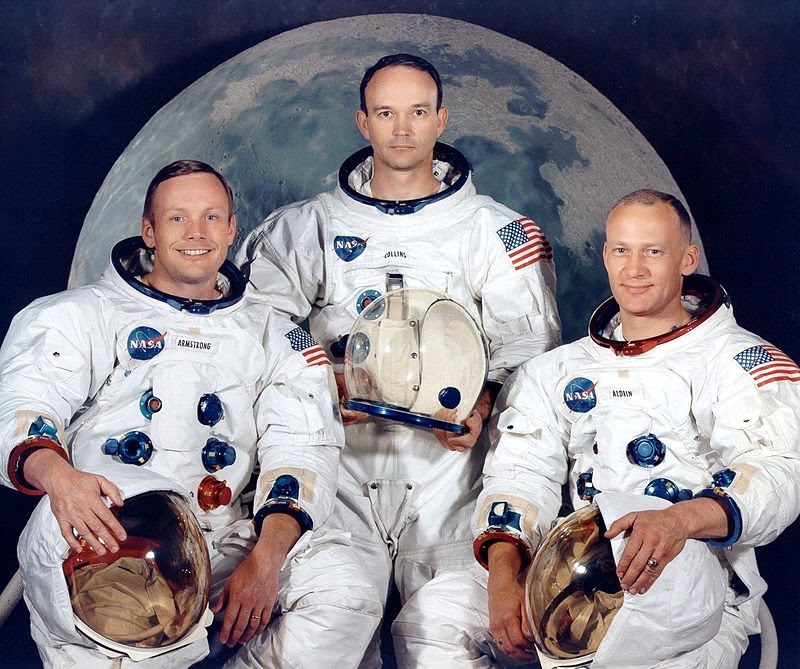
Courtesy of Wikipedia, Buzz Aldrin
Of course, I didn’t think about any of this at the time. I was only vaguely aware of women doing amazing things but I was acutely aware of inequality. At four, I proclaimed a desire to be the first woman president. As I near the age when that I could feasibly be the president, I find myself thinking much the same thing. It's time and why haven't we voted a woman into that office? My mother became an engineer in 1984 so I was more aware than some about what it took to be a pioneer but it wasn’t until many years later that I really appreciated what she, Sally Ride and even Christa McAuliffe were doing for girls and women.

By pursuing and achieving their dreams, regardless of their sex, these women profoundly affected the rest of us. By living their lives the way they wanted and not the way others may have wanted, they were forging new paths that women after them would follow. In a male-dominated world, it takes many, many firsts, examples and role models for girls and women to understand that they can do anything; that they too are brilliant and talented and can contribute. It wasn’t until this week, when I heard a radio interview about a new biography on Sally Ride, that I even really thought of and appreciated this amazing woman.
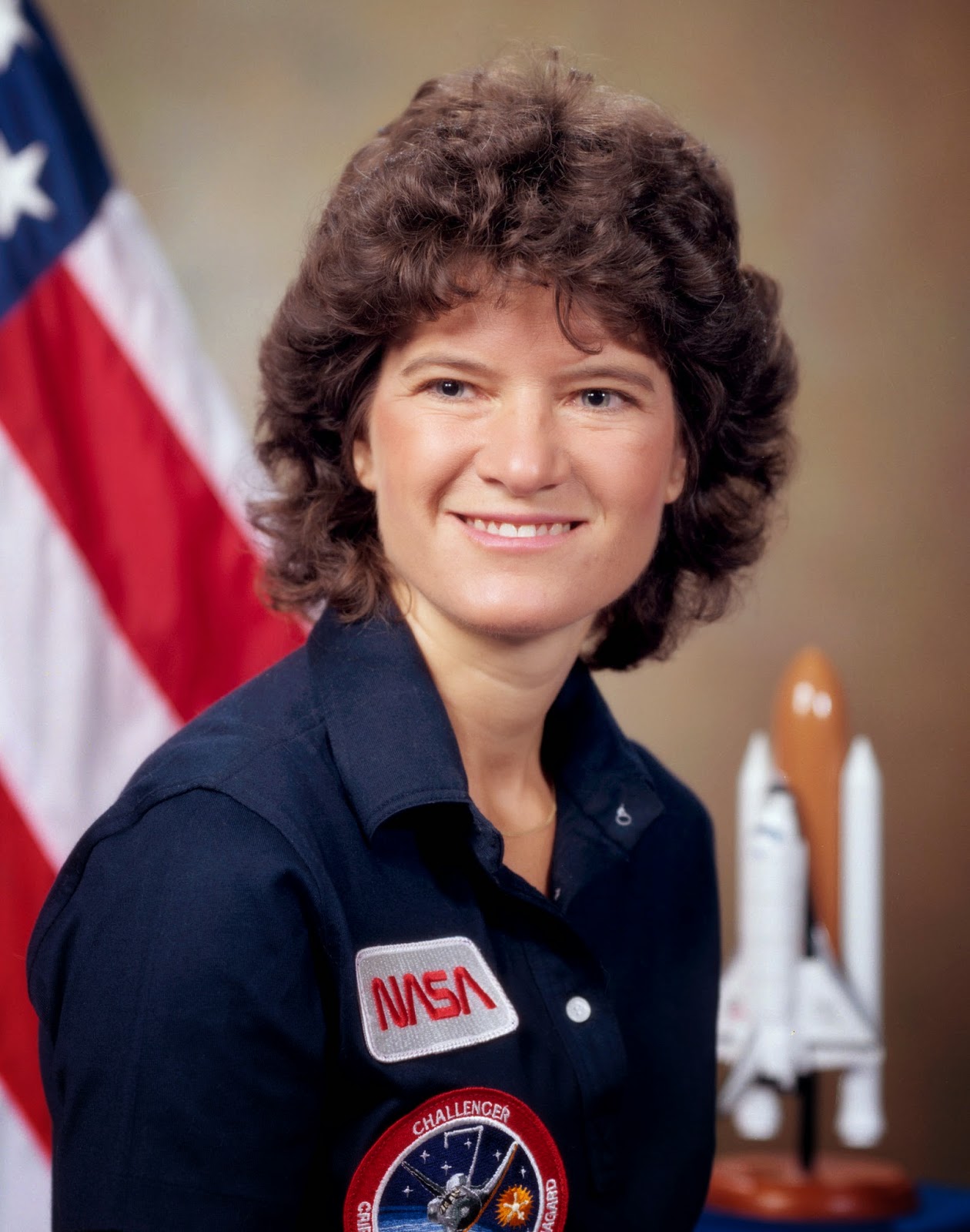
Courtesy of Wikipedia, Sally Ride
We desperately need heroes and far too often they’re out there and we simply aren’t aware of them. In the interview about her book, Lynn Sherr talks about the jokes that were made on the Tonight Show every night about Sally and how they, at some point, ceased to be funny and even elicited boos from the audience. “The idea of a woman as astronaut,” she says, “went from being a punchline to a matter of national pride.” It’s critical that we hear, tell and inspire stories of remarkable women until, quite frankly, they become unremarkable.