Wednesday, July 30, 2014

Helping the Eager Beaver

I recently watched a great History Channel series on DVD, America: The Story of Us. It made me sad to hear that when Europeans fanned out across the new America, they found beavers in the millions. Long ago hunted almost to extinction in Europe, beavers were hunted here for their thick pelts and to make men rich. Their numbers quickly dwindled.

But even today they’re considered a pest when they interfere with our plans and designs. All too often, instead of looking for creative solutions, we simply kill animals considered pests. Even though it was us who invaded and changed their natural environment.

Courtesy history.com
When we take the time to study the behavior of any wild animal though, we often find that they are incredibly beneficial to our environment and us. But it takes time, curiosity and a love of animals to understand their role and to make the changes necessary to thrive together. Figuring out how to share our world with animals challenges our traditional notions of success. For hundreds if not thousands of years, humanity has focused on conquering nature, not living in it. We’re quickly learning, though, that this way of living has dramatic unintended consequences.

Courtesy pbs.org
This was the focus of another great TV show, Nature: Leave it To Beavers. Beavers, it turns out, are enormously important in our changing climate! They keep water from trickling away from areas that desperately need it. They build elaborate dams, create ponds, attract and protect wildlife and develop lush wetlands. To reintroduce these creatures to wild areas, scientists trap and relocate them from suburban areas. The women who do this work have the opportunity not only to help the animals but humanity and the planet as well.


Little girls who love animals invariably want to be veterinarians when they grow up, wanting to work with dogs, cats or horses since those are the animals they’re most likely to interact with. Some fall in love with dolphins and dream of being a marine biologist. But there are a multitude of female scientists studying and helping wild animals in their natural habitats or helping to restore their habitats. Working in some of the most stunning landscapes in the world, these women are improving the lives of animals through hands-on involvement. It can be as rewarding and as heartbreaking as being a parent. Another fantastic show I've been watching on PBS is about the men and women who have become devoted parents to wild animals. New episode on tonight: My Wild Affair.


To prepare for this work, kids can make a practice of observing and wild animals in their own environment, visiting protected wild spaces and learning about the wild animals that live there and how our livelihoods are symbiotic. Understanding that wild animals have families, homes, favorite foods, things they’re afraid of and things that they’re good at makes it easier to appreciate them. They really aren’t so different from us!


The stereotype of a scientist is someone in a lab with goggles on, looking at the world through a microscope. But more and more, scientific minds are being used to study our natural world and design ways to live better, longer, and happier lives. Getting a college degree in biology, microbiology, physics, chemistry, math or statistics is now a very versatile choice, offering the most diversity in careers and allowing future job seekers to be part of team working to help animals. For we now know that when we give animals our love and understanding, everyone is better off.

Tuesday, July 29, 2014

How To Get Started As A Geek Girl

I've always said that I never want to be the smartest person in the room. It's the reason that I've left a number of jobs. Not that I was smarter than everyone else but that my learning opportunities had dwindled. If I'm not stimulated, challenged and given opportunities to learn, I grow frustrated and bored. In personal and professional situations, I'm happiest when surrounded by interesting, smart and curious people who are always learning new things. One of the major benefits of cultivating relationships with this type of person is that they're a font of valuable information.

Just today, I was trying to register for an Instagram account and got a message that my email address was already in use. I did a search in my email and found that someone had tried to open an account using my address -- by accident, I presume. They were unsuccessful and so the account is no longer active but Instagram wouldn't let me create another. I searched their Help page but could find nothing about this issue there. And I could find no way to contact anyone at Instagram by email or phone. Frustrated, I went to Facebook and posted the problem there. Within a few minutes, a smart web developer friend of mine had a fix. I tried it and it worked! I thanked my lucky stars, once again, for having smart friends who know things that I don't.

A couple of weeks ago, another smart friend of mine wrote a blog post of resources for her friend's "11-year-old daughter who is interested in getting into the gaming industry." What a seriously great idea. All I could think is how lucky that girl is to have a mom who has cool, smart friends to reach out to for help. I think like-minded people naturally find each other but cultivating quality friendships still takes work and time. You have to be willing to share your own knowledge as well as have the courage to act on the experience and knowledge of others. You have to be a good friend who listens, keeps confidences and gives good advice when it's asked for. More importantly, you have to be willing even eager to not be the smartest person in the room.

Courtesy of amysmartgirls.com

Thursday, July 24, 2014

My Favorite Position

A commonly held belief in Hollywood, I've heard, is that unless there's a sex scene in a movie there really is no reason for a woman to be in it. Despite the fact that it's mostly women who choose what movies to watch and at least half of the movie watching population is female, the people who make movies are still overwhelmingly male. So unless a movie is written, directed or produced by a woman, there's a very good chance that any women in it are serving as eye candy.

What's sadder is that this belief isn't limited to Hollywood. There's a very real and pervasive view of women as sexual objects even even while they're being politicians, doctors, teachers or writers. So when Lauren Conrad, author and TV personality was asked by a fan what her favorite position was, it could have been another in a series of humiliations that women face when trying to be taken seriously. But Conrad shot back "CEO" and changed the game.

Conrad's response launched an experiment to find out what other women say is their favorite position. Not surprisingly, she isn't the only one who chose CEO. So, what's your favorite position?

Courtesy mic.com

Saturday, July 12, 2014

A Woman In Space

When I was a sophomore in high school, someone at the school interrupted our class one day to announce that there had been an event. She wheeled in a television and we all watched a news report on the space shuttle Challenger, which had just exploded in midair killing all seven people on board including, Christa McAuliffe. McAuliffe, 37, was the same age as my mother. She wasn’t an astronaut, she was a teacher; a regular person who had won the incredible opportunity of going to space. Only she never got to space.

Watching the explosion and the aftermath, seeing the faces of the astronauts on board, and imagining all their hopes and dreams for going to space was devastating. I was reminded of the stories my mom had told me about the day President Kennedy had been killed. She too was in school. She was almost exactly the same age that I was when it happened. At the time, as a self-absorbed teenager, I wasn’t really aware of those coincidences; all I knew is that it was my first experience with a national tragedy and I would never forget it.

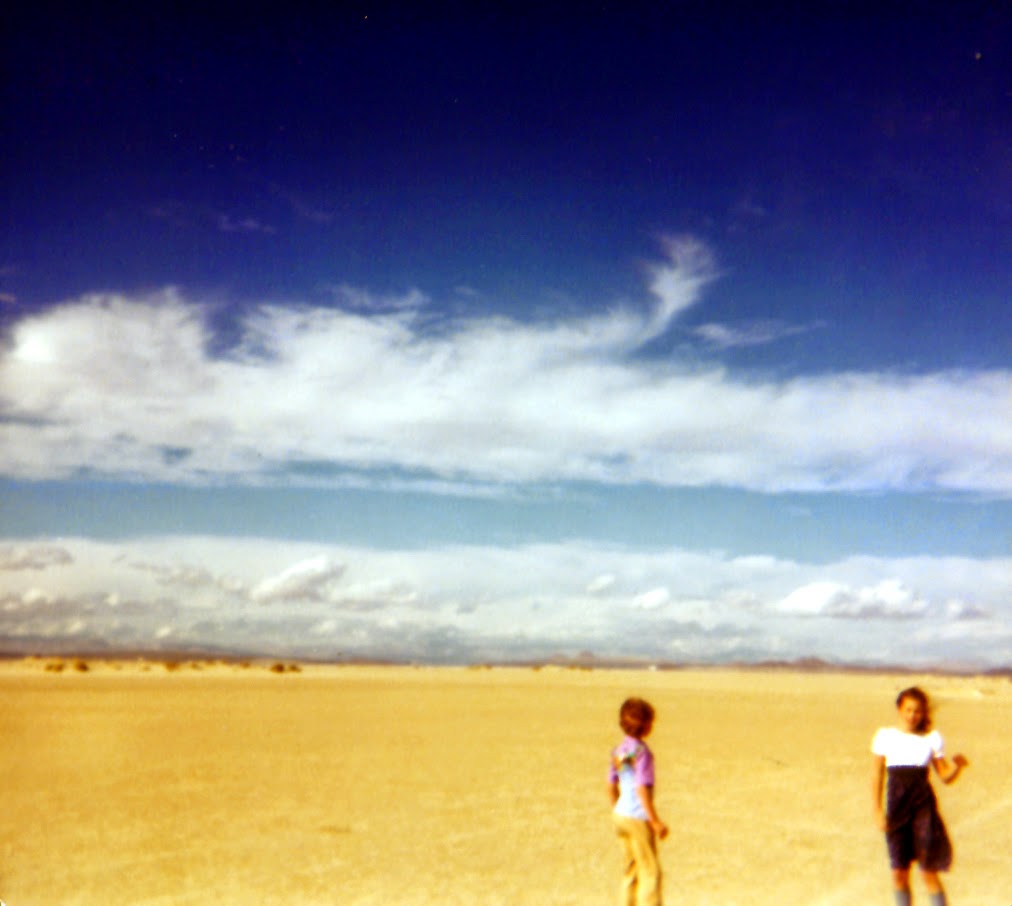
Two years before, my family had gone to see the space shuttle Challenger land at Edwards Air Force Base not too far from where we lived. We drove several hours to the hot California desert and then stood, windblown, on the flat barren earth for about 40 minutes listening to transmissions from the control room. Then, people started pointing at the sky. It was hard to see but there was just the tiniest speck of something up there. A bright light glimmering in the biggest, bluest sky I’d ever seen. It made a wide slow arc and then we heard two loud booms. Before my dad had finished explaining what a sonic boom was, the Challenger had stealthily approached and was on the ground trailing a cloud of dust. We roared with applause. Moments later, the astronauts disembarked and it was like watching aliens land on earth. They came from outer space.

©2014 by Angelique Little
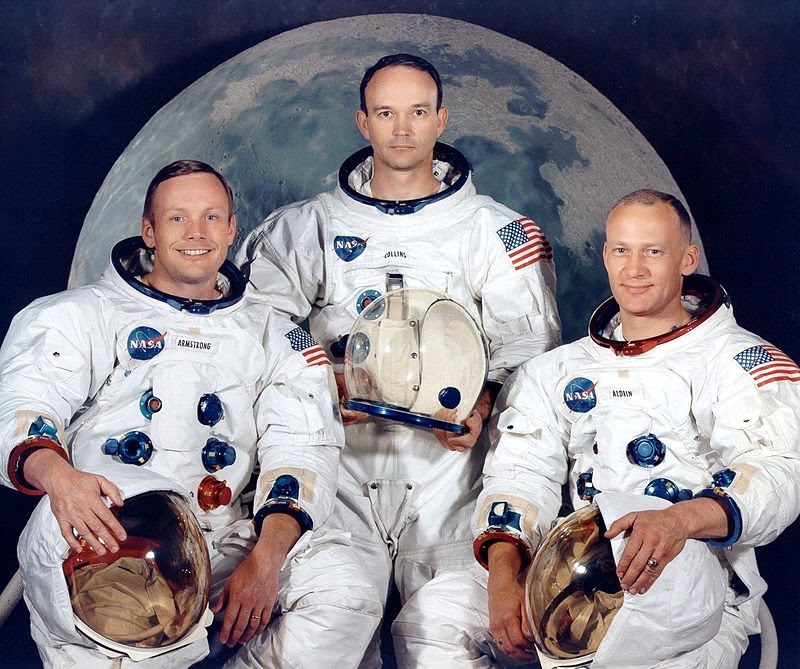
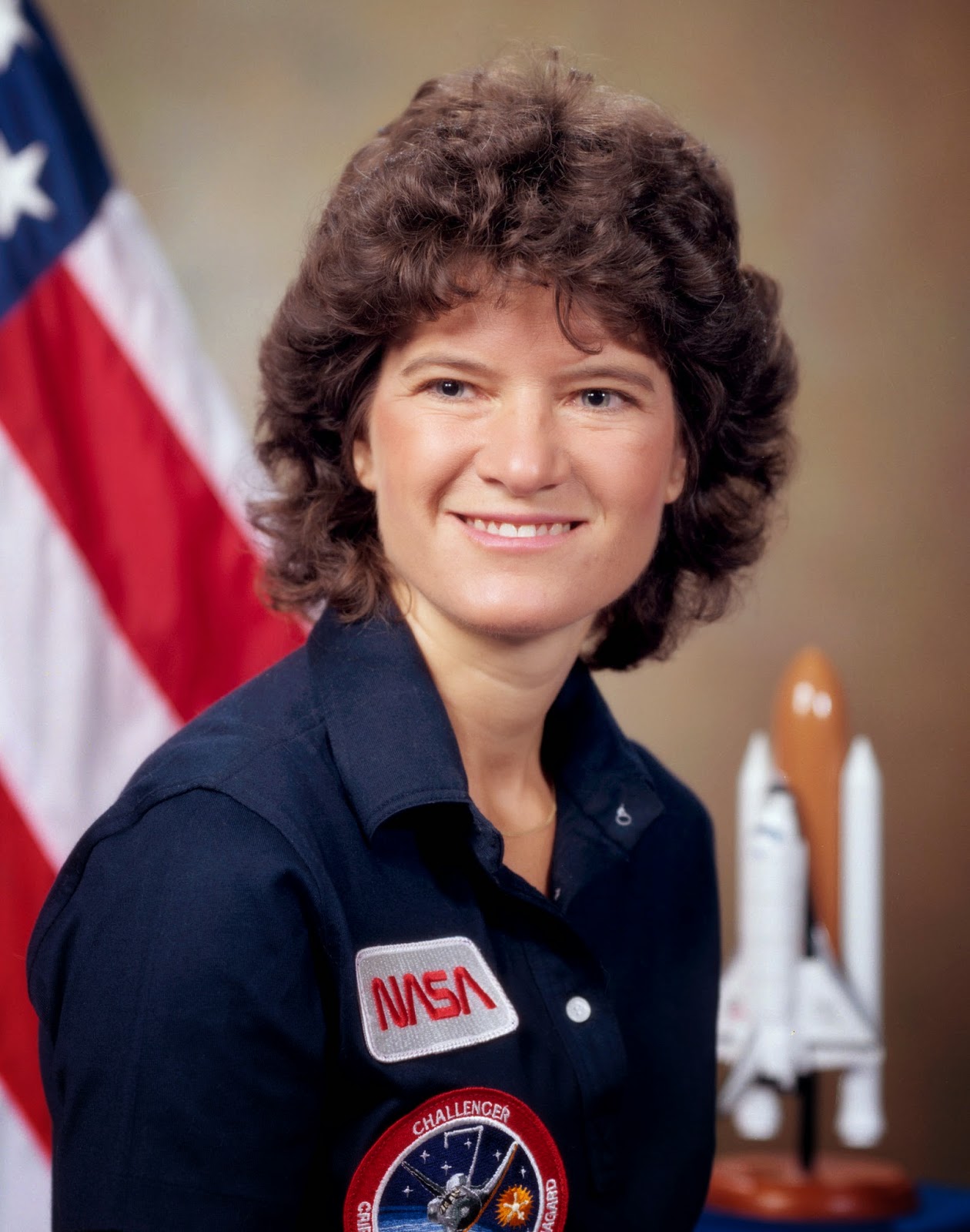
I had only the faintest idea then that I was witnessing history. Sally Ride had become the first American woman to go to space. Following the Challenger explosion and the death of Christa McAuliffe, the uniqueness of a woman in space was brought to the fore and I knew then without a doubt that more than the sound barrier had been broken. Growing up, I’d always envisioned astronauts as men. I drank my milk out of the Apollo glasses issued in 1969 to commemorate Neil Armstrong and Buzz Aldrin walking on the moon. Sally Ride hadn’t just been the first American woman in space; she was a physicist with a PhD. She was young and pretty and brilliant. And she was an astronaut. When she finished her maiden voyage, the controllers corrected their statement, “All five crewman doing a walk around inspection,” to “all five crew members.” Powerful changes began occurring in the hearts and minds of all Americans.

Courtesy of Wikipedia, Buzz Aldrin
Of course, I didn’t think about any of this at the time. I was only vaguely aware of women doing amazing things but I was acutely aware of inequality. At four, I proclaimed a desire to be the first woman president. As I near the age when that I could feasibly be the president, I find myself thinking much the same thing. It's time and why haven't we voted a woman into that office? My mother became an engineer in 1984 so I was more aware than some about what it took to be a pioneer but it wasn’t until many years later that I really appreciated what she, Sally Ride and even Christa McAuliffe were doing for girls and women.

By pursuing and achieving their dreams, regardless of their sex, these women profoundly affected the rest of us. By living their lives the way they wanted and not the way others may have wanted, they were forging new paths that women after them would follow. In a male-dominated world, it takes many, many firsts, examples and role models for girls and women to understand that they can do anything; that they too are brilliant and talented and can contribute. It wasn’t until this week, when I heard a radio interview about a new biography on Sally Ride, that I even really thought of and appreciated this amazing woman.

Courtesy of Wikipedia, Sally Ride
We desperately need heroes and far too often they’re out there and we simply aren’t aware of them. In the interview about her book, Lynn Sherr talks about the jokes that were made on the Tonight Show every night about Sally and how they, at some point, ceased to be funny and even elicited boos from the audience. “The idea of a woman as astronaut,” she says, “went from being a punchline to a matter of national pride.” It’s critical that we hear, tell and inspire stories of remarkable women until, quite frankly, they become unremarkable.

Thursday, June 26, 2014

Make Me Beautiful

I love this. A young woman, Esther Honig, sent a barefaced picture of herself to photo editors in 25 different countries and asked them to modify it as they might in a magazine, to make her closer to the ideal female beauty. Many came back with surprisingly little done; a little color here and there, smoothing of skin tone, etc. But a few are so radically altered as to be unrecognizable.

Courtesy of Esther Honig
One editor in the United States shockingly infantilized her, making her look like a girl rather than a woman. Check out the fantastic side-by-side comparison of each to the original. Definitely a thought provoking exercise. I also think it would be interesting to ask artists in different countries to draw or paint a woman of idealized beauty to see how they differ or resemble each other.

Wednesday, June 25, 2014

Come Fly With Me

This morning, I heard an interview with Amelia Rose Earhart, a pilot, who is planning to circumnavigate the globe in a single-engine airplane. At 31, she’ll be the youngest woman to do it and, inspired by her namesake Amelia Earhart, she’s taking nearly the exact route mapped out but never completed by the more famous Earhart in 1937. That Earhart disappeared over the Pacific Ocean and her remains were never found. Amelia Rose is confident that she won’t meet the same demise. She described the route and says one of the things she’s most looking forward to is all the places she and her co-pilot will be landing and staying including Trinidad and Tobago, Senegal, Brazil, Tanzania and The Maldives. I imagine it will be pretty exciting for the witnesses on the ground as well, especially girls and young women, to see Amelia Rose step out of an airplane flying around the world.

Courtesy of Amelia Rose Earhart
Then she explained how she got her name. Her father’s last name is Earhart and though he is not related to Amelia Earhart, he and his wife thought that giving their daughter the name was a unique opportunity. Imagine what this girl could accomplish with the name of a famous female role model! Growing up, people always asked Amelia Rose if she was going to be a pilot and she always replied no until the day she did decide to learn to fly. And loved it. Ten years later, Amelia Rose has become the role model she was named after. Not only is she embarking on Earhart’s voyage, she is going to be the first person to share the experience live via social media. She hopes to inspire girls to pursue aviation and, because she struggled to pay for her own lessons as woman in her twenties, founded Fly With Amelia, a non-profit that introduces flying to teenage girls and helps pay for their lessons.

Courtesy of Amelia Rose Earhart
I first flew as a passenger in a single-engine airplane a few years ago, on a date. Not usually the type of person to trust others with my life – especially someone I’ve known such a short period of time – it must have been love because from the moment Jacob started talking about flying, I wanted to do it. On our fifth date, we planned a trip from the Oregon coast to the San Juan Islands in the Puget Sound, Washington. It’s about a two hour flight in his Cessna 182 and we’d land directly on Center Island compared to a laborious 10-hour journey in which we’d drive from the coast, through Portland and Seattle traffic, to Anacortes to wait for a boat shuttle to the island.

After loading up and getting the plane out of the hangar, Jacob showed me how to buckle up (you use a three-point seatbelt like in a racecar), put on my headphones, and position the microphone. The microphone is vital because it’s the only way you can communicate while the plane is in flight. Small planes are pretty bare bones – compared to a large commercial plane – so they’re loud. You're inches away from a 230 horse-power engine. The headphones allow the pilot and the passengers to hear the radio, talk to others via the radio and talk to each other in the plane. Jacob went through a long laminated checklist. This took a while but it comforted me to see how methodical he was. He said matter-of-factly, “If there’s anything wrong, I don’t fly. Ever. No matter how badly I want to get where I’m going.” I smiled and admired him for his conviction. He didn’t take this lightly and nor should anyone.

The checklist comprised of physical checks of various components outside the airplane, checks at the control panel and listening to the engine. A seasoned pilot can tell instantly if something is amiss. Pilots and planes are far more regulated than automobiles and there are far fewer pilots than drivers so going strictly by percentages, it’s far safer to put your life into the hands of a pilot than a driver. I felt safe. Finally, all the checks cleared and we taxied out to the runway. I expected to be scared but I was afraid I’d be sick. Since I was a little girl, I’ve experienced motion sickness. I never feel good as a passenger in a vehicle, buses are a nightmare and I’ve actually used the sick bag on an airplane. For me to travel by boat it has to be a ferry, a large ship or I have to be medicated and flat on my back. I found that out during a romantic sunset sail around Lake Washington in Seattle on a gorgeous 26-foot sailboat. I didn’t see anything but the sky directly above me.

©2014 by Angelique Little

To my surprise, taking off was smooth and easy, nothing like the gas-guzzling thrust of velocity a commercial jet has to get going to take off. A small plane feels more like a glider. We took off into the wind – you always do – checking the wind direction with the bright orange windsock. Though, to be fair, on the coast the wind is always coming from the west or the north so pilots using this runway always take off going west. Once airborne, Jacob turned the plane towards our destination and we were on our way. Taking off and landing is most of flying; staying in the air is fairly easy providing you have enough fuel, can see where you’re going and have alternate landing spots available in case there’s engine trouble.

Jacob is VFR (Vision Flight Rules) rated which means he has to have visibility or he can’t fly. To fly without visibility, a pilot has to be IFR (Instrument Flight Rules) rated which means extensive instrument training, accompanied flights and staying current by clocking IFR hours. When you hear about a plane flying into a mountain, it's more than likely the pilot flew from (Visual Meteorological Conditions) VMC into I(Instrumentmore than likely flying IFR. The part of our brain that tells us how far away something is when we see it and how quickly we need to move to avoid it is ancient and highly developed. It’s our animal brain. The part of our brain that can read instruments, do mathematical calculations and make decisions without our senses is quite new and well, just not as reliable. I'm not sure I would have felt safe if I couldn’t see where we were going.

©2014 by Angelique Little

This trip certainly would not have been as enjoyable if I couldn’t see the gorgeous landscape spreading out around us. Flying between 9,000 and 13,000 feet, a small plane enjoys the most spectacular view. Below the cloud line, you rarely see the big jets flying at 30,000 feet and above. Small clouds traveled at our level and below, their perfect shadows moved along the ground across fields, roads, farms and towns. I watched out own shadow crossing rivers, following mountain ridges and flying through clouds. A tiny rainbow encircled our shadow at all times and I took pictures of it. To our left, the ocean opened up in a fantastic brightness, reflecting the sun back at us. In Washington, mountains rose, canyons deepened and I could see tiny rivers trickling through them like on a 3-D topographical map.

©2014 by Angelique Little

I felt like Peter Pan soaring above lakes, watching tiny cars drive on tiny roads, watching little dots of animals grazing on miniature pastures, and seeing the work of decades of gardening laid out as patches of color and greenery. It was just incredible. I also loved listening to the radio, though. As we passed through towered airfields, we might hear from air traffic control (ATC), checking in and letting us know if someone was coming up on our left or right or straight ahead. Part of the co-pilot’s job is to watch out for other aircraft. Usually, you’re flying at a slightly different altitude so it’s pretty easy to avoid getting in anyone’s way. In a bigger flight zone, however, like Seattle’s Sea-Tac airport, it’s not uncommon for ATC to ask you to change altitude or modify your path slightly to avoid oncoming traffic. Their job is to land planes at the airport. To do that, they need to know what everyone else in their airspace is up to. And in their airspace, you do what they tell you to do.

©2014 by Angelique Little
After a beautiful flight, we were at our destination and ready to land. I’d already taken a lot of pictures out the windows but Jacob asked me to make a video of our landing. He does this himself quite often with his cell phone, in its mount on the window. I pointed the phone at the front window and the propeller looked really weird in the video. It’s there and then it’s not there. It doesn’t look continuous, it looks like it’s appearing and then disappearing. But I had to focus because apparently, this happens really fast. We were nearly on the ground! I usually would brace myself and breathe deeply, maybe even closing my eyes, but he’d asked me to video so I was holding my phone and watching instead. To land a small plane, you basically starve the engine of fuel to slow it down. The trick is to slow down enough to land but not enough to stall – in which case you can still land but you have less control over the plane. The moment before landing is almost silent as you glide towards the ground. I saw some people on the side of the runway waving at us. “Is that your family?” I asked and then, we were on the ground. I didn’t hear or feel a thing. We gently slowed and pulled into a spot off the runway and then Jacob stopped the plane. Smoothly, perfectly.

©2014 by Angelique Little

On the return trip, we talked more about flying. About how he’d always wanted to do it and when he had a good job, he bought a plane. It’s not cheap but it’s not the most expensive hobby either. If your priority is to fly and you are willing to spend less on a car, house and vacations, it’s definitely possible. If you rent a plane rather than buy one, it’s something most anyone with a good job could do. One of Jacob’s flight instructors was a woman but the percentage of licensed pilots who are female is 6%, similar to other male-dominated occupations. The biggest reason could simply be that flying hasn't been marketed to women and girls and they simply don't think to do it. I'm guessing that after the media blitz with dozens of pictures of the lovely Amelia Rose flying around the world, that could change. Though she's just one of many female pilots working to get girls interested in flying, she is certainly the most high profile.